Staffing Simplified ™
Your #1 Remote Staffing Provider
Flowz empowers businesses to soar by providing trained, dedicated and managed remote staff at
a fraction of the price.








Spend more time on what matters most. Let our executive virtual assistants manage your emails, calendars, and other routine tasks.

Get your print or digital projects ready for publishing with Flowz’s graphic designers.

From generating sales opportunities to contacting prospects, our virtual assistants help you build a stronger pipeline.

Leverage our multilingual customer support specialists to resolve your customer issues efficiently across all channels.

Be it social media design, copywriting, or website management, our virtual assistants streamline all your online marketing needs.

No bookkeeping task is off-limits for us. We help create financial reports, process invoices, monitor cash flows, and more.











Call - an Flowz VA is at your disposal all day.

Text message - an Flowz VA is at your disposal all day.

Chat, screen share, and video conference from one secure location with Flowz Talk.

Flowz Meeting covers all your web conferencing needs without any sign-ups or downloads.

Plan, manage and track your VA’s work through Flowz Projects.

Get cloud storage for your documents, videos, and images on Flowz Drive.
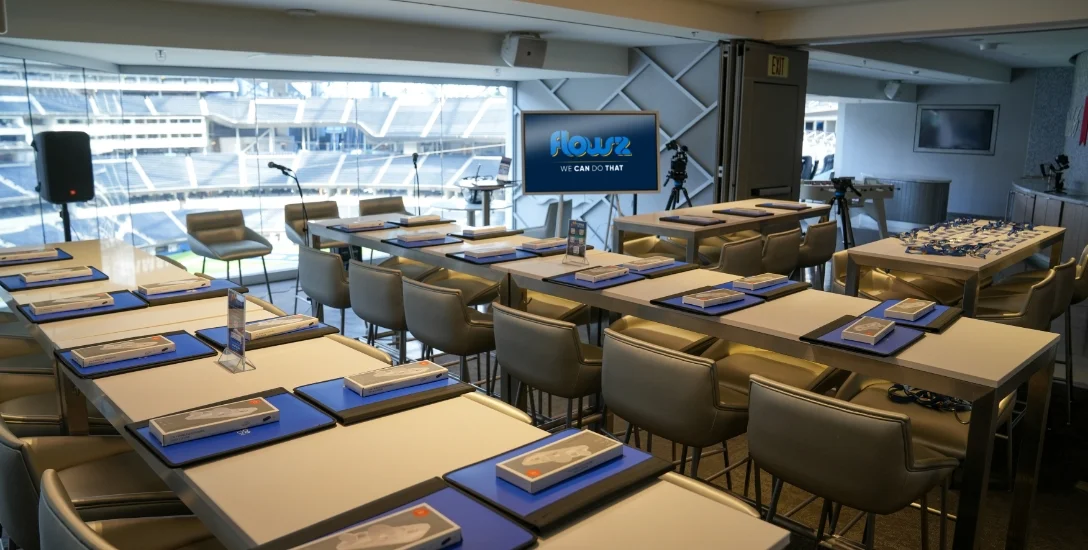






















Flowz's remote staff work with engineering companies to significantly improve their bottom lines, gain access to technical staff and ramp up operations. With our business growing exponentially.

We saw Flowz as a potential solution Expert. We’ve been working with Flowz for a number of years now. We get a dedicated person on our business and that works incredibly well. But the really great thing is that they are dedicated to us.

Flowz has really enabled us to grow faster by hiring double the talent for a single local resource cost and having multiple eyes for that solution has made us grow faster due to the increased quality and faster turn times...

We are not able to get more work done in a more cost effective way. They are incredibly valuable resources and besides just the cost savings, I save about 50% in time.

Flowz provides the full spectrum of services. As I think about our growth, that partnership has been a very important part of it. Our industry is complex, and our ability to grow quickly is depending on partners like Flowz.

Flowz has had an immediate and positive impact on our bottom line. Being up in Seattle, it’s difficult to find the resources you need when you need it. With Flowz we found a group of great employees who could work for us right away and at a very cost effective rate.

I wish it was only me using Flowz and not my competitors. We bought six companies and each company we buy we have integrated Flowz into them.

I think the simplest way to put it is that Flowz has a ‘can do’ attitude. I’ve yet to present something to Flowz that they couldn’t do or figure out. We’ve grown our business significantly and have acquired six companies. Flowz supports and interacts with all parts of our supply chain.